02 September 2026
AI in Recruitment: Why Validated Psychological Assessments Still Matter
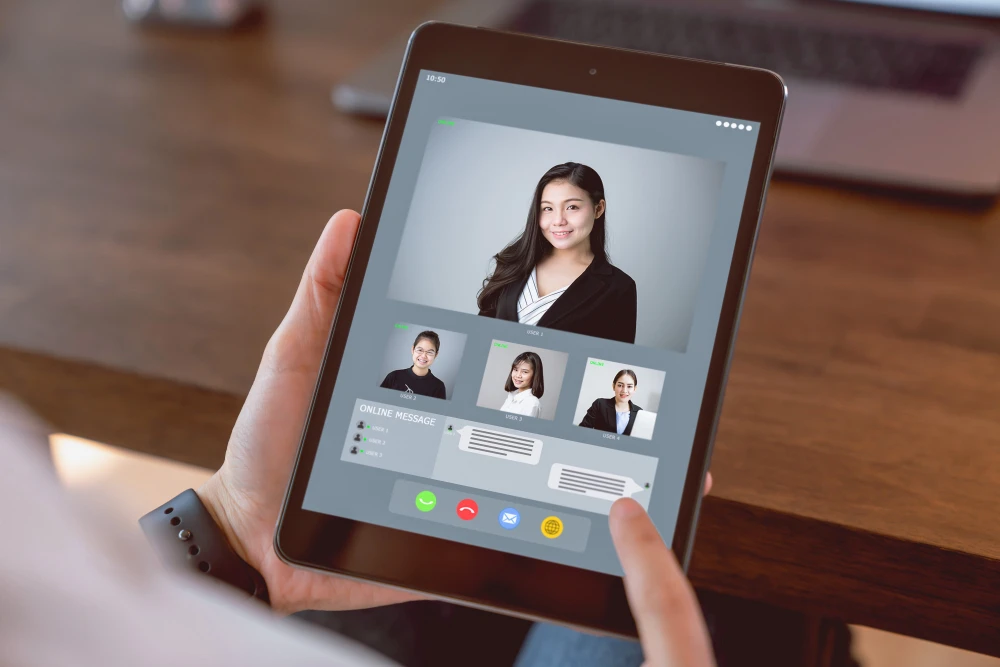
AI is now used across almost every stage of recruitment, from CV screening to automated interviews. However, candidate trust in AI remains significantly lower than its adoption among companies, while algorithmic bias continues to be a real concern. Validated psychological assessments remain an important complement to AI because they provide objective and standardized data that does not rely solely on potentially biased historical data.
AI is now present in almost every stage of the recruitment process, from screening hundreds of CVs in seconds and scheduling interviews to conducting automated video interviews. This speed has encouraged many companies to consider AI as a primary tool for evaluating and selecting candidates.
However, behind its efficiency lies an important question: Can AI really be trusted to evaluate people fairly and accurately? This article takes a closer look at AI in recruitment and explains why validated psychological assessments are still necessary.
The Rapid Adoption of AI in Recruitment
The use of AI in recruitment has grown rapidly over the past few years. According to the Employer Branding survey, 87% of companies now use AI in their recruitment processes, while 93% of recruiters plan to increase their use of AI in 2026.
Unfortunately, candidate trust has not grown at the same pace. Only 26% of candidates believe AI can evaluate them fairly. This gap is important for HR teams to understand.
When companies rely too heavily on AI without sufficient transparency, the risks go beyond evaluation accuracy. It can also affect the company's reputation among candidates, particularly top talent who often have multiple employment opportunities to consider.
The Risk of Bias in AI Recruitment
Despite the promise of greater objectivity, AI can inherit biases from the data used to train it. Because AI learns from historical data, patterns of discrimination from the past can potentially become part of current algorithmic decisions without the company realizing it.
A 2025 University of Washington study, as reported by HR Brew, found that recruiters using biased AI tended to “imitate” those biased choices in up to 90% of their decisions.
Another study also noted that the majority of U.S. companies now rely on only a small number of the same AI screening vendors. This means that a biased algorithm could potentially influence recruitment decisions across multiple companies at the same time.
For HR teams, these findings should serve as a warning: AI is not an automatic guarantee of more objective hiring decisions. Without proper oversight, AI can actually scale biases that previously occurred at an individual recruiter level.
Why Validated Psychological Assessments Still Matter
Unlike AI models that learn from historical data, validated psychological assessments are designed and tested through rigorous psychometric processes. These processes consider factors such as reliability, objectivity, and validity against clearly defined work-related criteria, rather than simply identifying patterns from past data.
This approach is one reason cognitive tests and other psychological assessment tools remain relevant even as AI technology continues to evolve. Validated assessments also provide HR teams with something that can be difficult to obtain from AI: methodological transparency.
HR can explain the basis behind the scores generated by an assessment, while this can be much more difficult with black-box AI models whose decision-making processes may be difficult to trace.
The Ideal Combination: AI for Efficiency, Assessment for Accuracy
Rather than choosing between AI and psychological assessments, the most realistic approach for HR today is to combine both based on their respective strengths.
Use AI for high-volume administrative tasks, such as initial CV screening or interview scheduling, where speed is the primary consideration.
Use validated psychological assessments for high-impact decisions, such as selecting final candidates or filling strategic positions, where accuracy and accountability are more important than speed.
Conduct regular audits of AI tools, ensuring that unnoticed patterns of bias are not influencing recruitment decisions.
Combine AI results with assessment data as an additional verification layer before making a final decision, rather than relying entirely on AI.
With this approach, companies can benefit from the efficiency offered by AI without sacrificing the accuracy and fairness of the candidate selection process.
Keep Recruitment Decisions Objective in the Age of AI
Efficiency matters, but the cost of making a poor hiring decision because of excessive reliance on AI can be much higher. Combining AI's speed with the accuracy of properly validated assessments can help companies build a more balanced recruitment process.
Book a Free Consultation with the Psikologiehub team to find the right combination of assessments to complement your company's AI-powered recruitment process. You can also contact the Psikologiehub Corporate Team to discuss your company's assessment needs directly.
FAQ
1. Is AI in recruitment completely free from bias?
No. AI learns from historical data, which means it can potentially inherit existing biases if the system is not regularly audited.
2. Can AI completely replace psychological assessments?
It is not recommended. AI is effective for high-volume administrative tasks, while validated assessments are better suited to high-stakes decisions that require greater accuracy.
3. Why is candidate trust in AI still low?
Many candidates feel that AI-driven recruitment processes lack transparency and that the basis for evaluation is difficult to understand. Validated assessments, by comparison, have methodologies that can be clearly explained.
4. How can HR keep recruitment fair while using AI?
HR can combine AI for efficiency with validated psychological assessments for accuracy, while regularly auditing the AI tools used throughout the recruitment process.
Related News & Articles

What Is a Cognitive Test? Types and Benefits for HR
A cognitive test measures thinking abilities used in recruitment. Learn about its types, benefits, and how HR can use the results.
LEARN MORE
The Thinkers (Investigative): Best Fit for Finance
Learn about The Thinkers (Investigative) personality type in the Holland Test (RIASEC), their key traits, ideal work environment, and why many Finance and Data Analysts share this profile.
LEARN MORE
The Persuaders (Enterprising): Thrive in Sales
Discover the Enterprising personality type (The Persuaders) in the Holland Test (RIASEC), including key personality traits, ideal work environments, and why they often excel in Sales and Business Development.
LEARN MORE